

Šī vietne izmanto sīkdatnes
Lai šī tīmekļvietne darbotos, tā izmanto obligāti nepieciešamās sīkdatnes. Noklikšķinot uz pogas “Sapratu”, jūs aizvērsiet informatīvo brīdinājuma logu!

Laboratorija ir akreditēta saskaņā ar standarta LVS EN ISO/IEC 17025:2017 „Testēšanas un kalibrēšanas laboratoriju kompetences vispārīgās prasības”.
Latvijas Nacionālā akreditācijas biroja reģistrācijas Nr. LATAK-T-687. Laboratorijas akreditācijas apliecība testēšanas sfēra derīga līdz 2029.gada 19.septembrim.
Laboratorijas darba organizācija balstās uz LVS EN ISO/IEC 17025:2017 standarta prasībām, kā arī efektivitātes programmas LEAN (metodes – 5S, Kaizen un Asaichi) pamatprincipiem.
Laboratorija tapusi Eiropas Savienības projekta LIFE20 IPE/LV/000014 – LIFE Waste To Resources IP ietvaros.
Kušanas entalpijas izmaiņa/ Melting enthalpy change
Akreditētas metodes
| Nosakāmais parametrs | Standarts/Metode | Standarta nosaukums/Metodes apraksts |
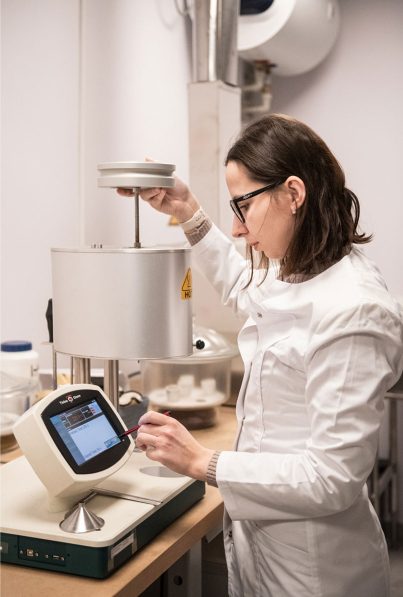
| Termoplastisko kausējumu masas plūsmas ātrums (MFR)/ The melt mass-flow rate (MFR) of thermoplastic | LVS EN ISO 1133-1:2022 A procedūra: Masas mērīšanas metode/ Procedure A: Mass-measurement method | Plastmasas. Termoplastisko kausējumu masas plūsmas ātruma (MFR) un tilpuma plūsmas ātruma (MVR) noteikšana.1. daļa)/ Plastics. Determination of the melt mass-flow rate (MFR) and melt volume-flow rate (MVR) of thermoplastic- Part 1. |
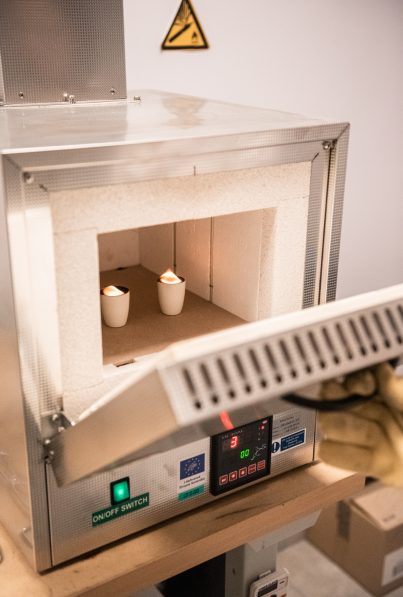
| Pelni/ Ash | LVS EN ISO 3451-1:2026 A metode (Ātra pārpelnošana)/ A method (Rapid method) | Plastmasas. Pelnu noteikšana.1. daļa Vispārīgās metodes/ Plastic- Determination of ash – Part 1: General methods |
| Kušanas maksimuma temperatūra / Melting peak temperature | LVS EN ISO 11357-1:2023 LVS EN ISO 11357-3:2025 | Plastmasas. Diferenciālā skenēšanas kalorimetrija (DSC). 1.daļa: Visparīgi principi/ Plastic- Differential scanning calorimetry (DSC) – Part 1: General principles Plastmasas. Diferenciālā skenēšanas kalorimetrija (DSC). 3.daļa: Temperatūras un kušanas un kristalizācijas entalpijas noteikšana/ Plastic- Differential scanning calorimetry (DSC) – Part 3: Determination of temperature and enthalpy of melting and crystallization |
| Kušanas entalpijas izmaiņa/ Melting enthalpy change | LVS EN ISO 11357-1:2023 LVS EN ISO 11357-3:2025 | Plastmasas. Diferenciālā skenēšanas kalorimetrija (DSC). 1.daļa: Visparīgi principi/ Plastic- Differential scanning calorimetry (DSC) – Part 1: General principles Plastmasas. Diferenciālā skenēšanas kalorimetrija (DSC). 3.daļa: Temperatūras un kušanas un kristalizācijas entalpijas noteikšana/ Plastic- Differential scanning calorimetry (DSC) – Part 3: Determination of temperature and enthalpy of melting and crystallization |
Neakreditētas metodes
| Nosakāmais parametrs | Standarts/Metode | Standarta nosaukums/ Metodes apraksts |
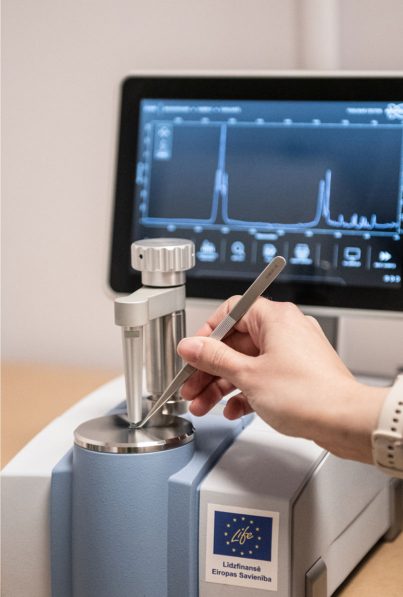
| FTIR/ FTIR | 17025-NP-01 (Iekšējā metode)/ 17025-NP-01 (In-house method) | Iekšējā metode, kas balstās uz kvalitatīvu materiāla identifikāciju, izmantojot Furjē transformācijas infrasarkano spektroskopiju (FTIR)/ In-house method based on qualitative identification using Fourier-transform infrared spectroscopy (FTIR) |
| Mitrums polietilēnā un polipropilēnā/ Moisture in polyethylene and polypropylene | 17025-NP-02 (Iekšējā metode)/ 17025-NP-02 (In-house method) | Iekšējā metode mitruma noteikšanai, izmantojot termogravimetrisko metodi ar Mettler Toledo HX204 Moisture Analyzer pie noteiktas temperatūras un noteiktā laika/ In-house method for moisture determination using a thermogravimetric method with a Mettler Toledo HX204 Moisture Analyzer at a specified temperature and for a specified period of time |
| Plēves/plastmasas lokšņu biezums/ Film/plastic sheet thickness | 17025-NP-03 (Iekšējā metode)/ 17025-NP-03 (In-house method) | Iekšējā metode biezuma noteikšanai, izmantojot Mitutoyo 547-401A digitālo biezuma mērītāju ar mērīšanas diapazonu 0–12 mm. Metode nav piemērojama reljefām, izteikti strukturētām vai embosētām plēvēm, ja nav iespējams nodrošināt reprezentatīvu mērvirsmu kontaktu ar materiālu/ In-house method for thickness determination using a Mitutoyo 547-401A digital thickness gauge with a measuring range of 0–12 mm. The method is not applicable to embossed, highly textured or structured films where representative contact between the measuring surfaces and the material cannot be ensured |
Paraugi testēšanai tiek pieņemti pirmdienās – piektdienās no 9.00 līdz 16.00.